

Translations about a Body of Humus
•
Translations about a Body of Humus is a project that continues my artistic research, in which I conceive of translation as a transfer, an action, a movement that carries voice, gesture, and memory from one place to another in multiple ritual and vital writings. The art pieces that make up this exhibition are not records, but inscriptions, possible writings of continuous action.
I interact with the landscape, the earth, the environment. I enter into a relationship with that humus that makes me human, humble, a wild body. From there, I investigate and experiment, searching for gestures that may have existed long before, that may have had an ancestral meaning in that territory. As I enter into them, I also enter into a subconscious communication with the memories of the place.
The photographs, videos, scores and textiles show actions carried out between Argentina (Buenos Aires, Santa Fe, Catamarca, Patagonia) and Spain (Alicante, Madrid) in this journey in search of no origin.


The exhibition consisted of 34 pieces that combined performance, photography, textiles and moving images. Each piece functions as a node within a larger ecosystem, where languages contaminate and sustain each other.
25 ACTIONS TO LISTEN TO VOICES FROM OTHER WORLDS
Durational performance art
Is it possible
to tune in to excesses of existence, infra-light presences, through gesture?
To listen to their voices?
To translate them with my hands in the air?
To enter into dialogue and phonate?
To modify the soundscape with the swaying of bells?
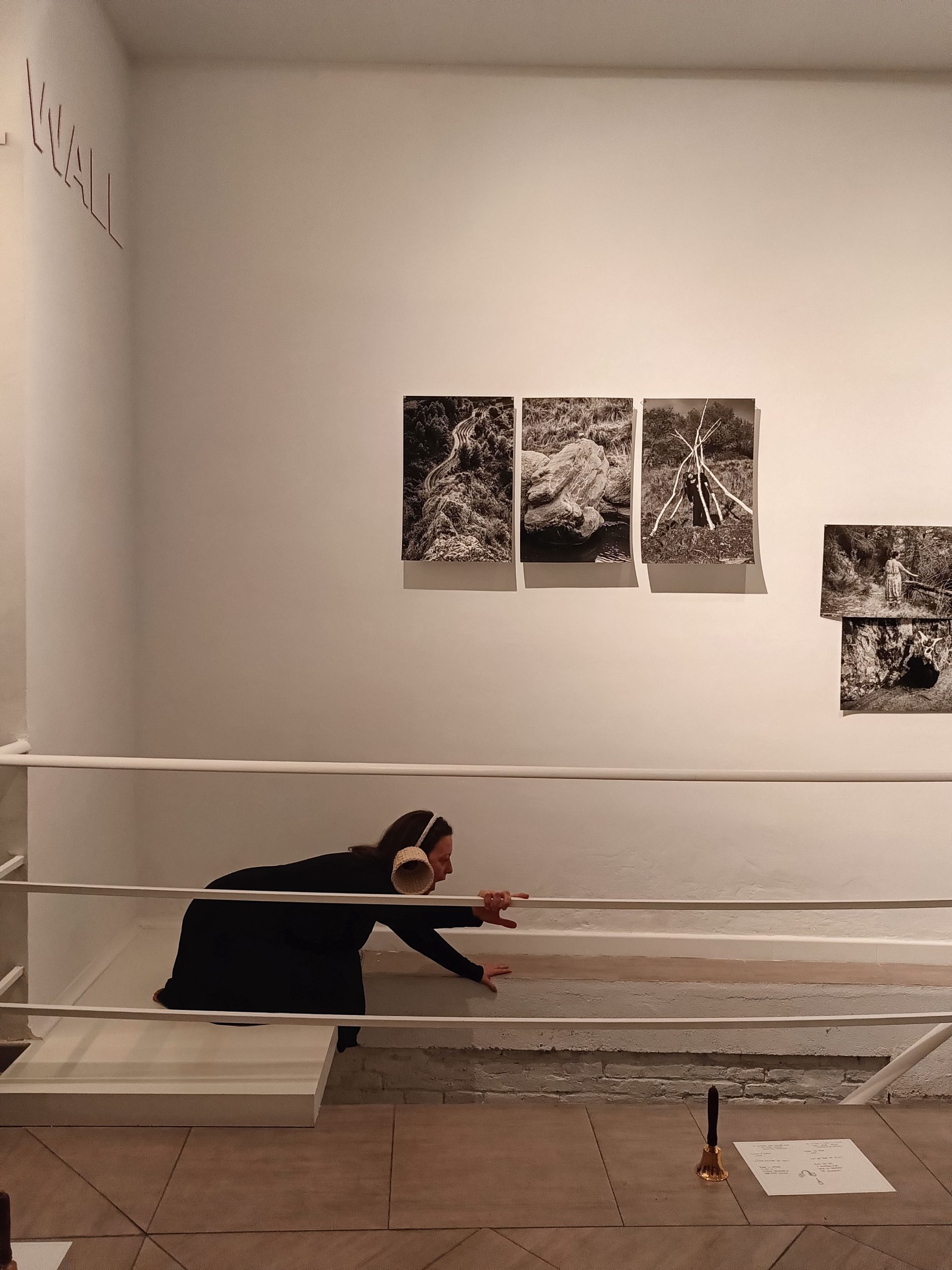
In this durational performance art piece, I attempt to listen to voices from other worlds through amplifiers that I have built myself for this purpose. These precarious devices function as extensions of the body: listening prostheses, translation tools, sensitive thresholds between the visible and the inaudible. They do not seek to amplify a recognisable sound, but rather to attune attention to subtle, infra-light presences that exceed the human.
Through gesture, I seek to enter into a relationship with these presences and translate them with my own voice. I write them down as a medium—letting something pass through—and tune them like a seismograph, recording minimal vibrations, almost imperceptible movements in the sensitive field.
In the space, I arrange three bells that the audience can activate, modifying the subtle plane of sound. Sometimes I am the one who activates them; other times, the sound emerges from someone else’s gesture. Voices, bells, breaths, writings, and bodily movements overlap and intertwine, forming a multi-layered landscape where the audible and the invisible coexist, affect each other, and produce a shared listening experience.


DEVOTION
Walking performance art through the Malasaña neighbourhood + presentation of the book Archive to get myself back.
giving voice to the unspoken,
from the intimate to the public,
sustained
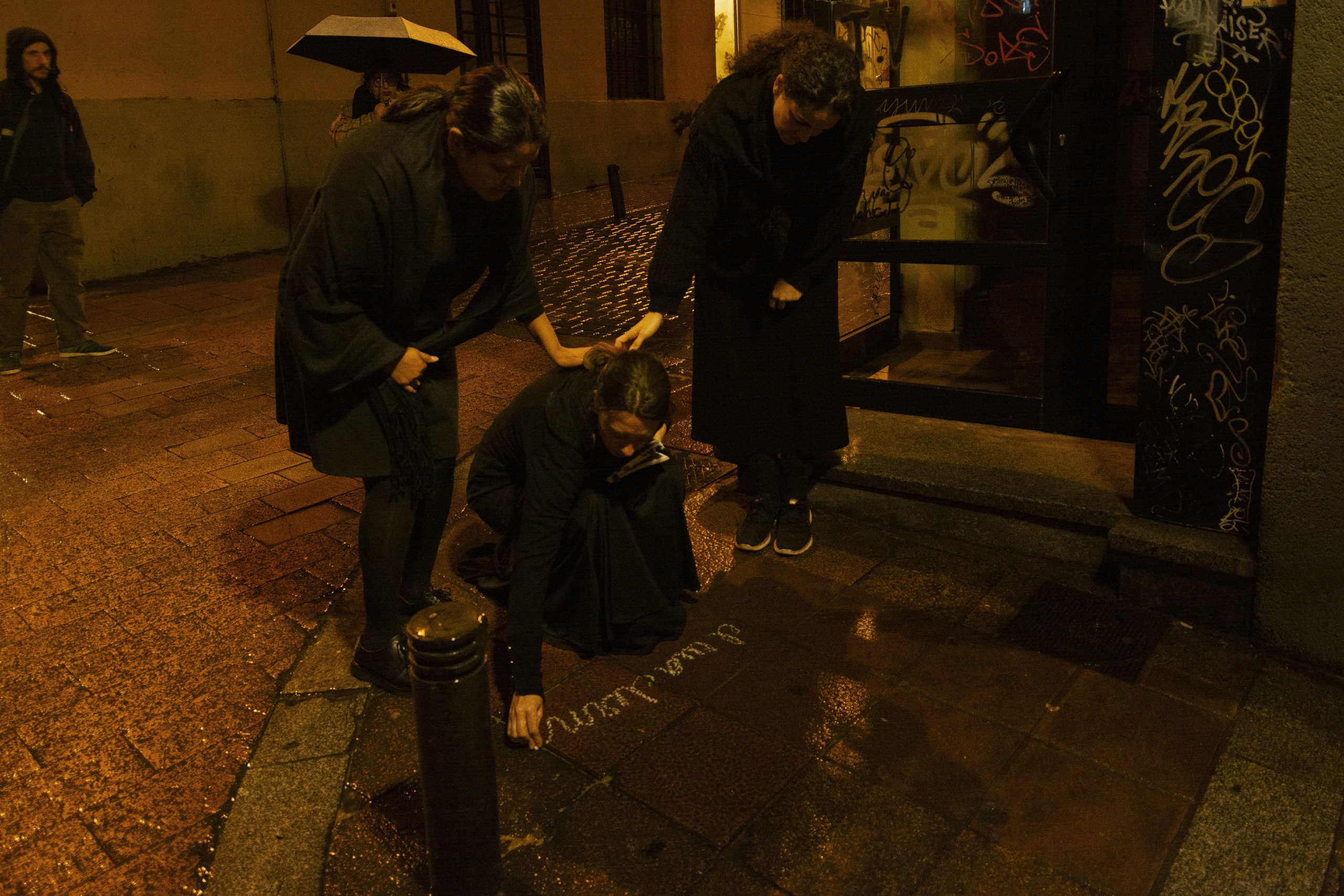
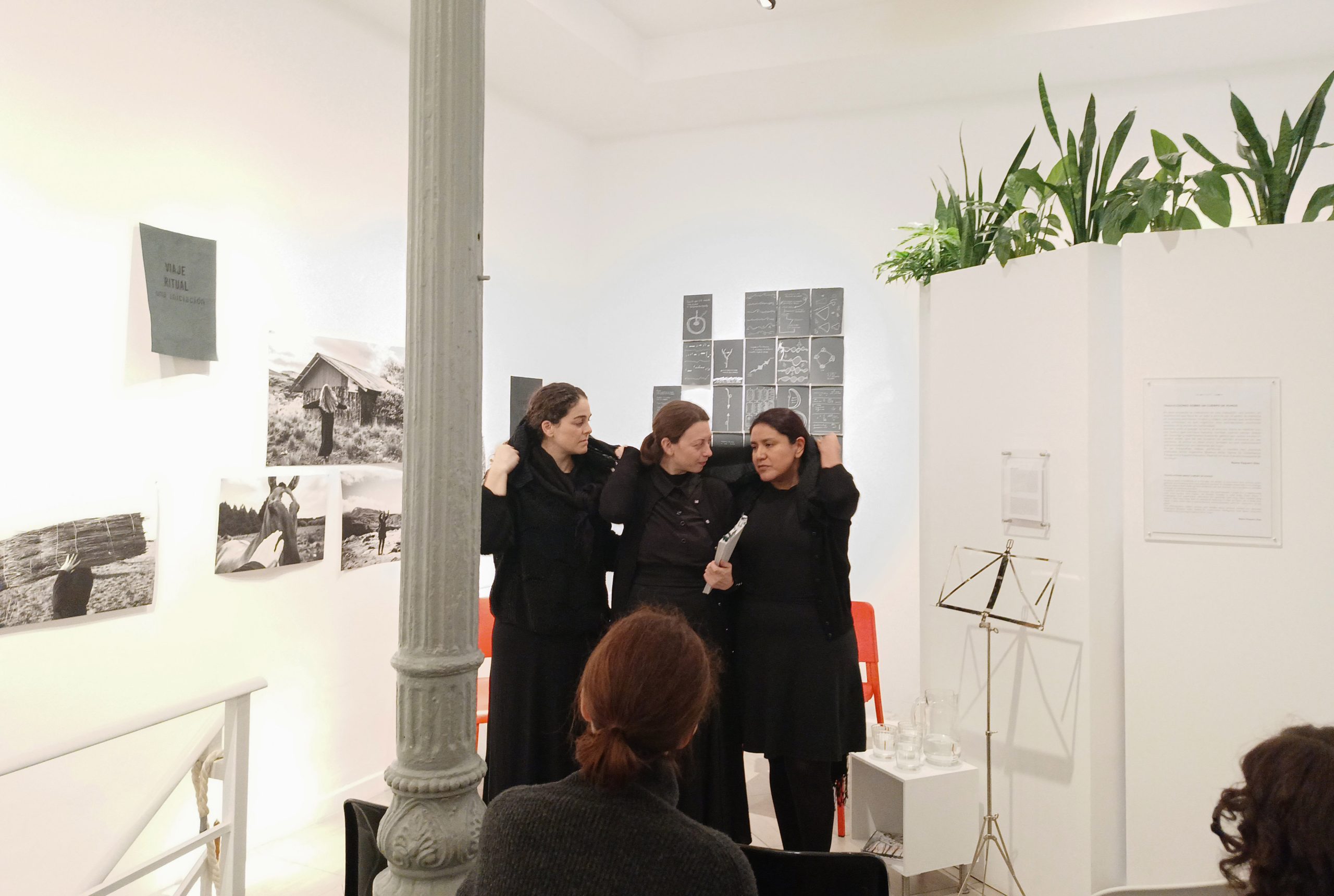
Devotion was a walking performance art, an emotional procession through Madrid’s Malasaña neighbourhood. It took place at dusk on a rainy Saturday and consisted of walking together, reading aloud and caring for one another in public spaces.
Together with Maritza Vélez Sampedro and Ana Beltrán Porcar, we walked arm in arm through the neighbourhood streets. As we walked, we read excerpts from Archive to Get Myself Back, wrote with chalk on the cobblestones, sang a lullaby, and shared the secret with those who joined the walk. Our voices merged with the sound of the rain, which tried to erase the ephemeral writing, and with the glow of the city lights.
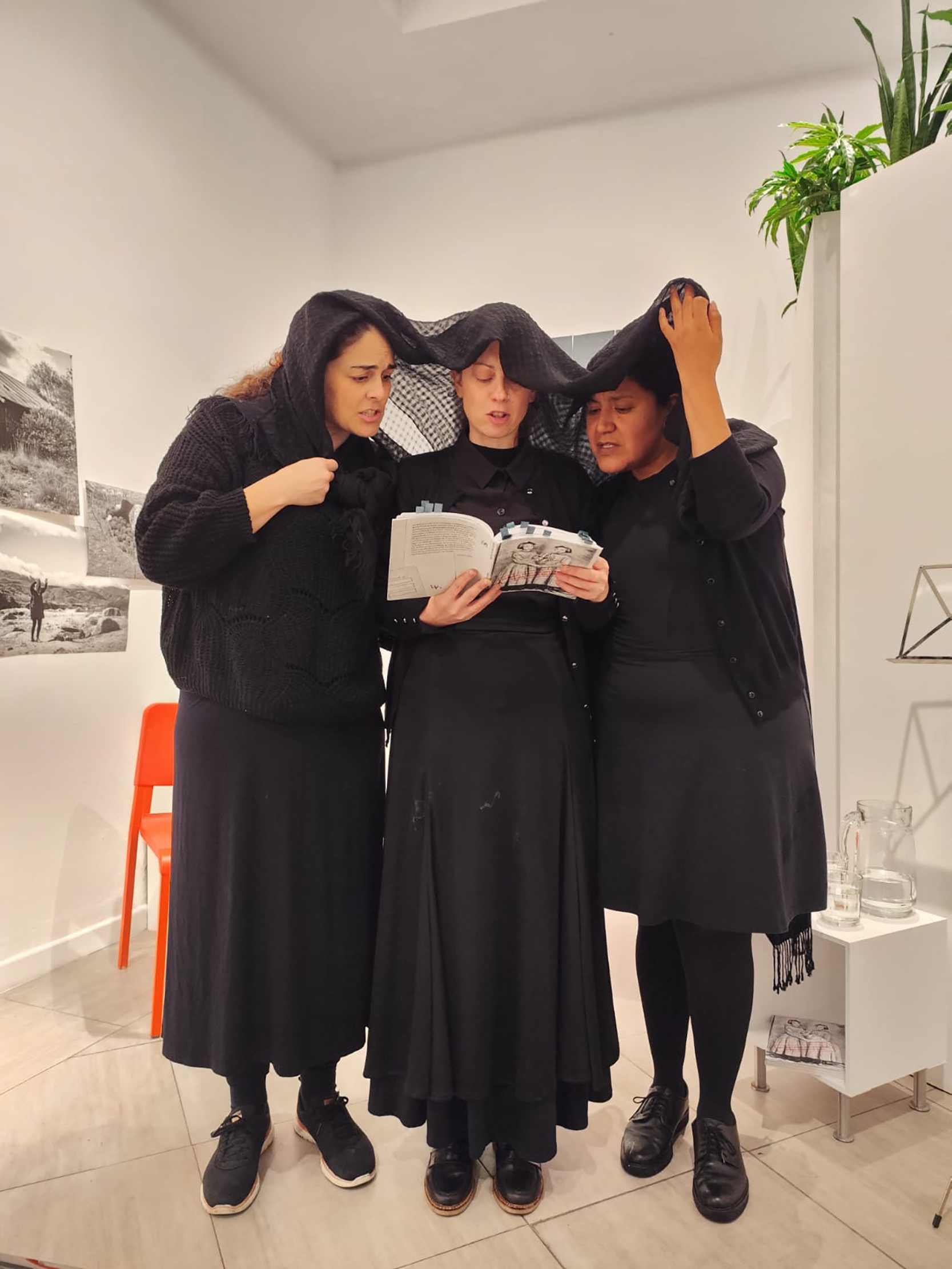
When we arrived at Galería CasaSur, we mingled with the audience and read an excerpt from the book in unison. Then, the book circulated from hand to hand: other voices activated the reading and the performative novel moved again, multiplying in other bodies.
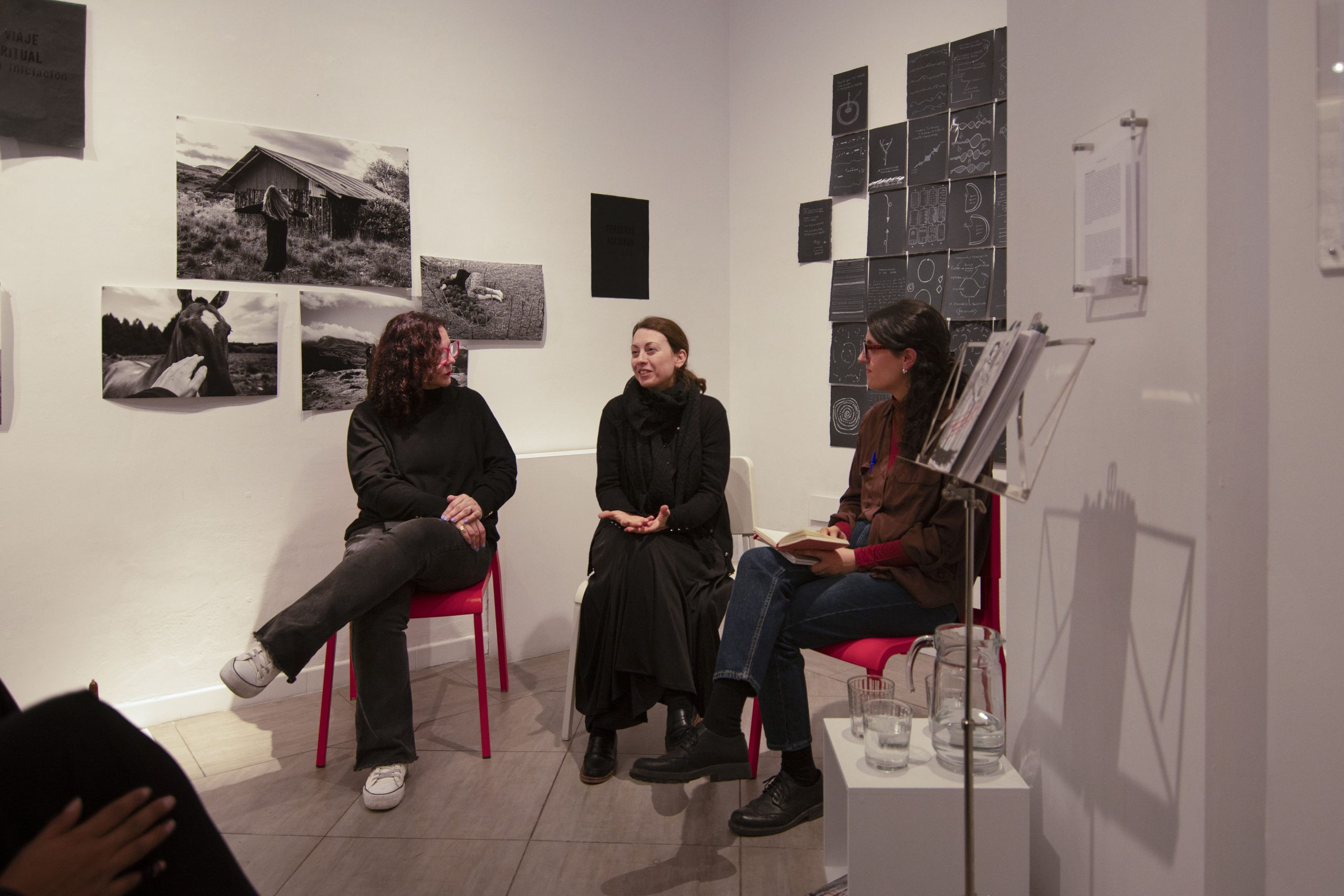
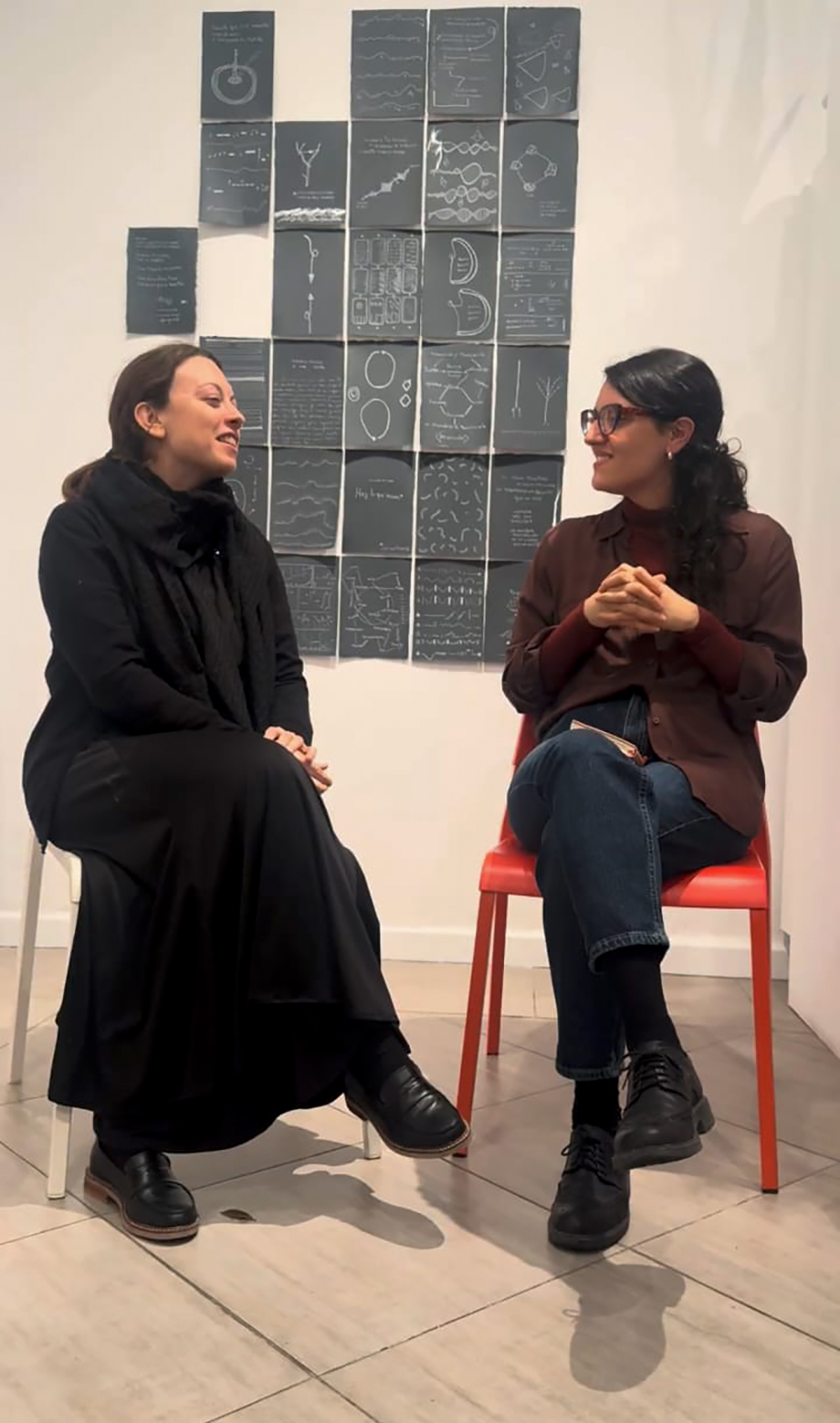
The action continued with a dialogue with Romina Casile, a lively conversation—a dance of hands, ideas, and words—about Archive to get myself back: the notion of the performative novel, the intersections between autobiography and fiction, expanded writing, the relationships between body and image, the characters that inhabit the book, and what it means to show the monster.



PLACE AND DATE
CasaSur Gallery, Madrid. 12 to 19 November 2025
PHOTOGRAPHIC RECORD
Lucila Bodelón